Why Hybrid Sourcing Is the Wholesale Strategy That Wins in 2026
What a Hybrid Sourcing Strategy Actually Is
A hybrid sourcing strategy is a deliberate mix across multiple wholesale acquisition channels, typically combining traditional auctions, fixed price wholesale, and direct wholesaler relationships. Each channel plays a specific role, and the combination means no single channel can take down the lot when conditions shift.
The goal isn't to use every channel equally. It's to match each channel to what it does best, and to have enough access to each one that a slow period in any single channel doesn't create an inventory problem.
Why Single Channel Sourcing Is a Hidden Risk
Most independent dealers default to a primary sourcing channel, whichever one they learned first or built relationships in. When that channel performs well, sourcing feels easy. When it slows down, the lot feels it immediately.
Wholesale market conditions shift. Regional supply patterns change. Pricing volatility compresses margins in ways that are hard to predict. A sourcing channel that worked reliably in 2022 may look different in 2026. The dealers most exposed to that volatility are the ones with no secondary channel already in place when their primary slows down.
The Three Channels and What Each Does Best
Traditional auctions are built for competitive buying: opportunistic deals, specific or rare inventory, and regional vehicles that surface through live bidding. For dealers who invest the time and know their market well, auctions remain a strong sourcing channel for the right vehicles.
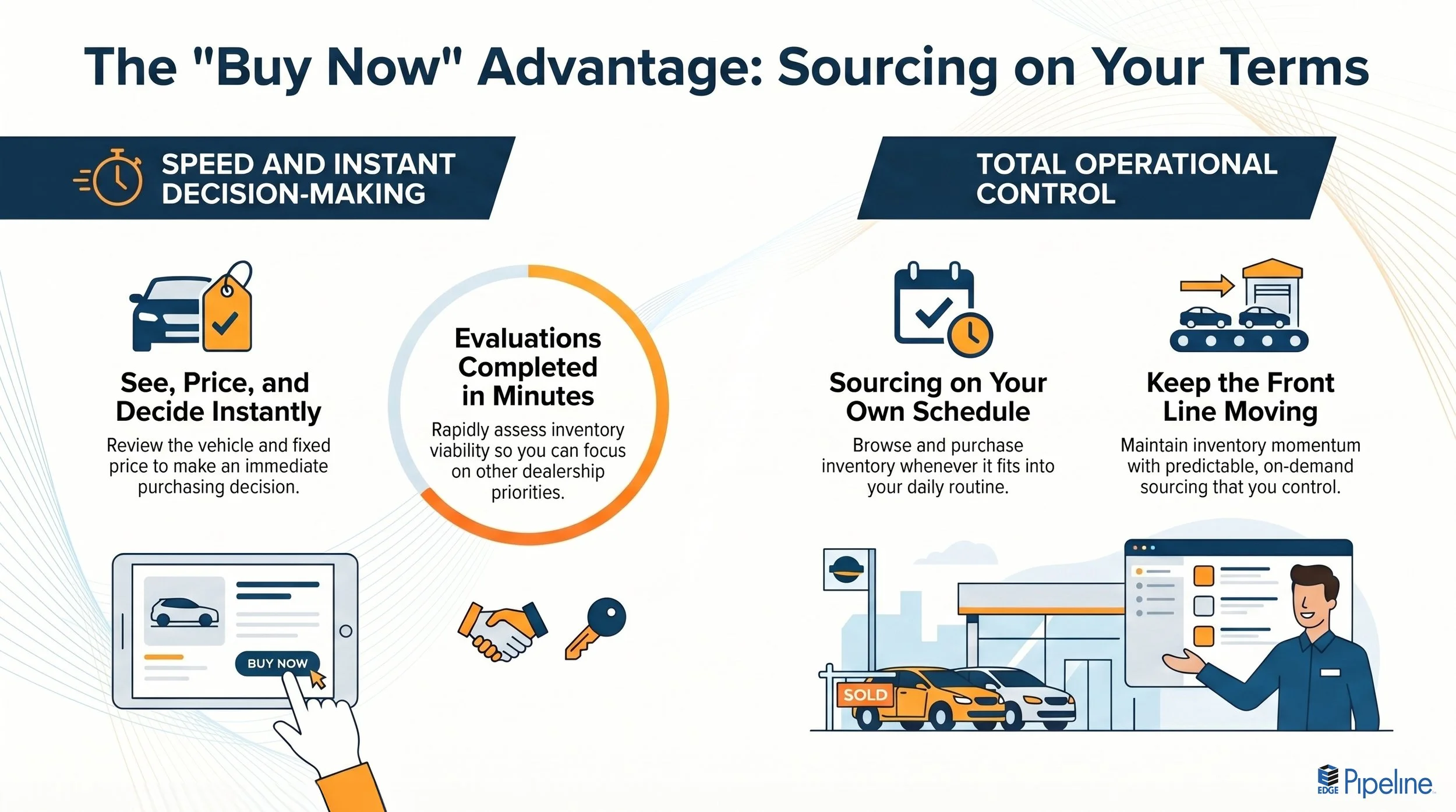
Buy Now wholesale vehicles are built for consistency: filling front line slots, replacing what just sold, and sourcing on any day of the week without a scheduled window. The fixed price removes bidding variability and allows same morning acquisition decisions. Where auctions excel at opportunistic buying, fixed price wholesale excels at keeping inventory steady.
Direct wholesaler relationships are built for specificity: inventory types you source repeatedly, regional vehicles that don't move through major channels, and deals built on personal trust. These take time to develop but produce inventory that's hard to access any other way.
How to Build a Hybrid Strategy
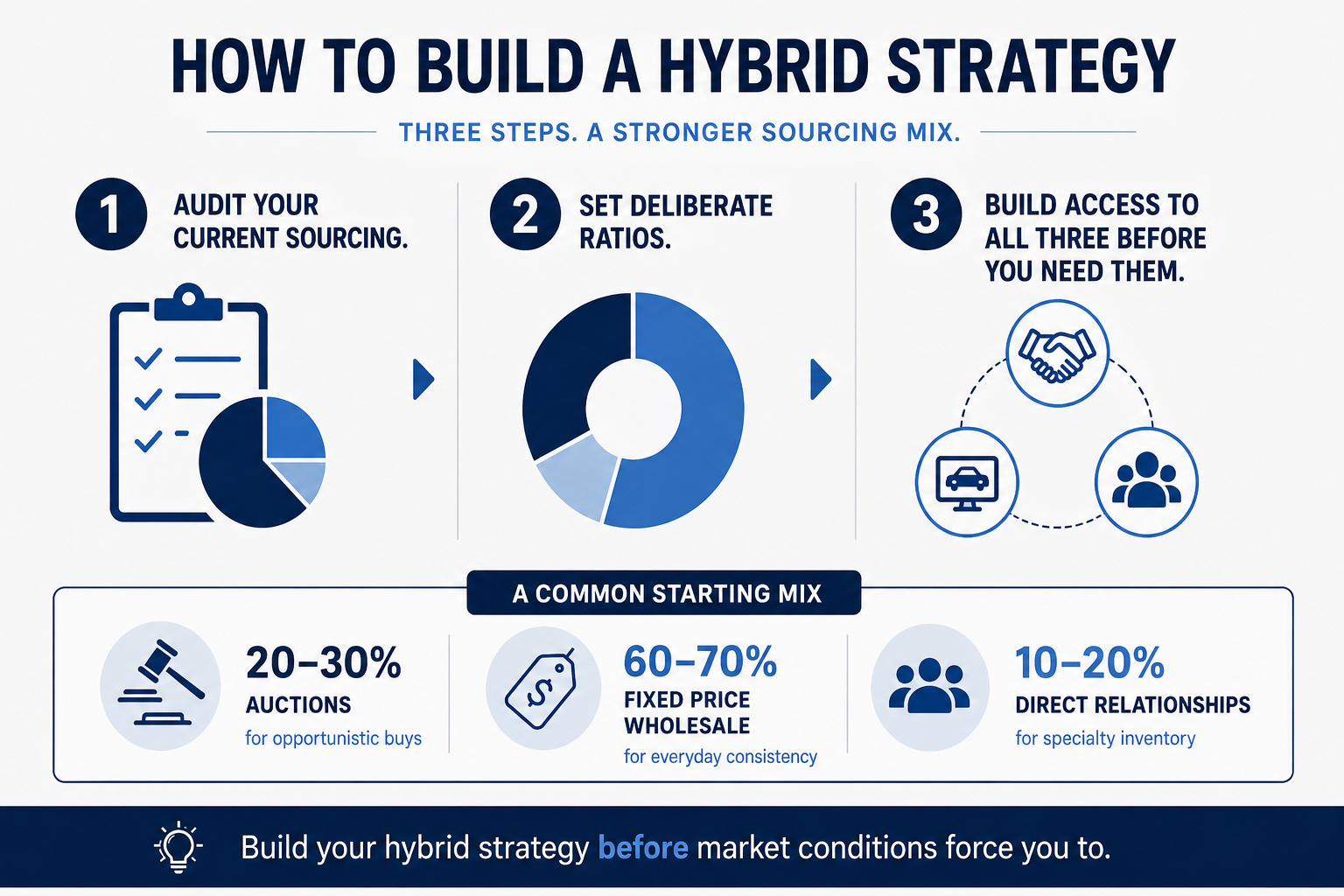
Three steps establish a workable mix:
Audit your current sourcing first. What percentage of your last 30 vehicles came from each channel? Most independent dealers find they're more concentrated in one channel than they realized.
Set deliberate ratios. A common starting point is 20 to 30% auctions for opportunistic buys, 60 to 70% fixed price wholesale for everyday consistency, and 10 to 20% direct relationships for specialty inventory. Adjust based on your market and inventory mix.
Build access to all three before you need them. Adding a second channel takes time: relationships to establish, platforms to learn, sourcing habits to build. The dealers best positioned when market conditions shift are the ones who built their hybrid strategy before conditions forced them to.
What Diversification Protects Against
A hybrid sourcing strategy protects against seasonal supply shifts that affect specific channels disproportionately, regional inventory patterns that hit local auctions but not national fixed price marketplaces, and pricing volatility that creates margin pressure in competitive bidding environments.
The cost of building a second channel is minor. The cost of being caught without one when your primary slows down is significant.