Why Time to Sale Is the Most Underrated Metric in Independent Dealing

Gross margin gets all the attention
Gross margin is the easiest number to see. It shows up on every deal jacket, every spreadsheet, every monthly P&L. Most dealers can quote their gross within $50 on a deal they made last week. Few can quote their average time to sale within a week.
The problem is that gross alone doesn't tell you how much money the lot is actually making. Two vehicles with identical gross produce very different annual returns depending on how fast they turn. The metric most dealers aren't tracking is the one that predicts compounding.
The capital efficiency math
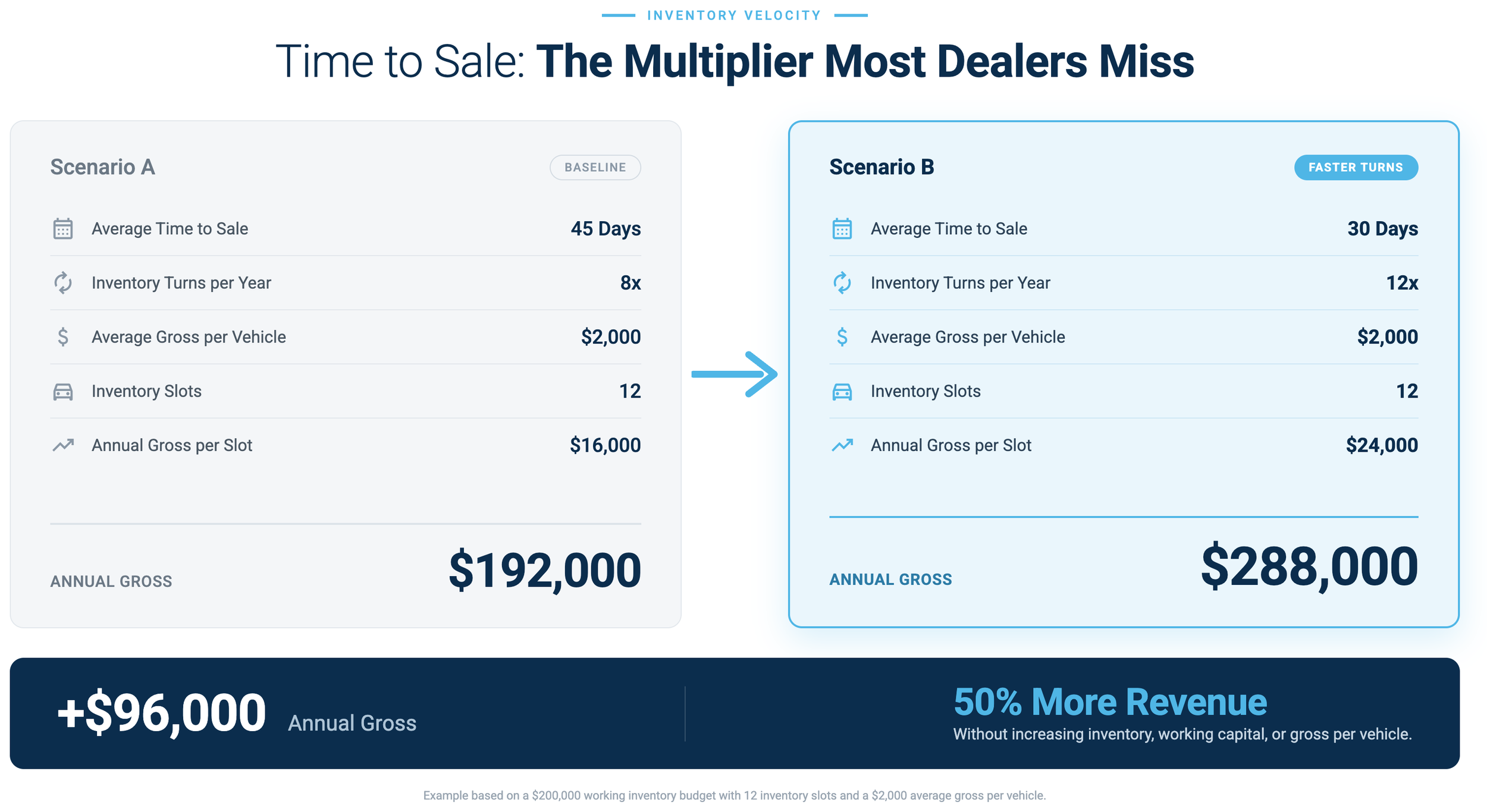
Consider two scenarios on a $200,000 working inventory budget:
Scenario A: 45 day average time to sale. The lot turns about 8 times a year. At an average gross of $2,000 per vehicle, annual gross per slot is roughly $16,000. With 12 slots, total annual gross is around $192,000.
Scenario B: 30 day average time to sale. The lot turns about 12 times a year. Same $2,000 average gross. Annual gross per slot is roughly $24,000. With 12 slots, total annual gross is around $288,000.
Same lot. Same gross per deal. Same capital. The faster turn produces 50% more annual revenue. That's not a marginal improvement, that's the difference between a healthy lot and a thriving one.
What drives time to sale
Three factors compound to determine inventory velocity:
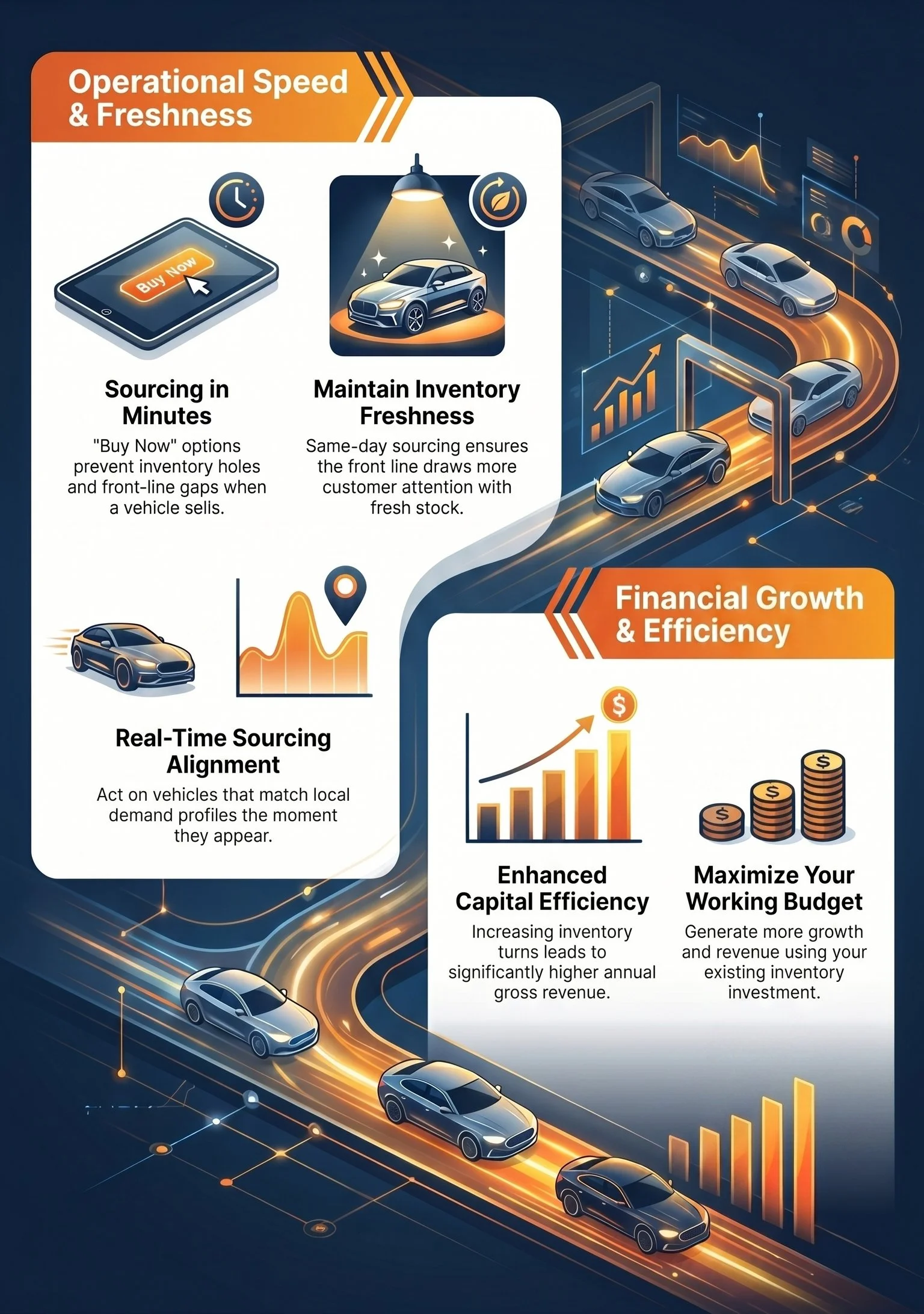
Sourcing speed: how fast you can replace what just sold. A sourcing delay of several days means an inventory hole every time a vehicle leaves the lot. That gap affects traffic, and thinner traffic shows up in the next vehicle's days to sale.
Inventory freshness: how recently your front line vehicles were acquired. Fresh inventory draws customer attention. Vehicles aging past 30 days turn slower than vehicles in their first two weeks on the lot, and that dwell time compounds across the front line.
Sourcing alignment: how closely your acquired vehicles match the demand profile of your local market. Misaligned sourcing produces inventory that sits regardless of what you paid for it.
How fixed price wholesale affects the equation
How Buy Now works addresses two of the three factors directly. It compresses sourcing speed: you can source in minutes because there's no auction window to schedule around. And it supports inventory freshness: same day sourcing means your front line stays composed of vehicles in their first weeks of dwell time rather than aging into slower turns.
Sourcing alignment requires discipline regardless of channel. But faster sourcing makes alignment easier to maintain because you can act on the right vehicle when it appears, rather than waiting for the next opportunity.
The one metric worth tracking this quarter
If you implement one tracking change this quarter, track time to sale on every vehicle. Calculate the monthly average. Watch it trend.
Then ask where the delay is happening: sourcing, recon, listing, or pricing. Each of those is fixable, but you can't fix what you're not measuring. The dealers compounding the fastest are the ones tracking the metric that actually predicts compounding.
Browse Buy Now inventory and start compressing the front end of every turn cycle with faster inventory turn.